


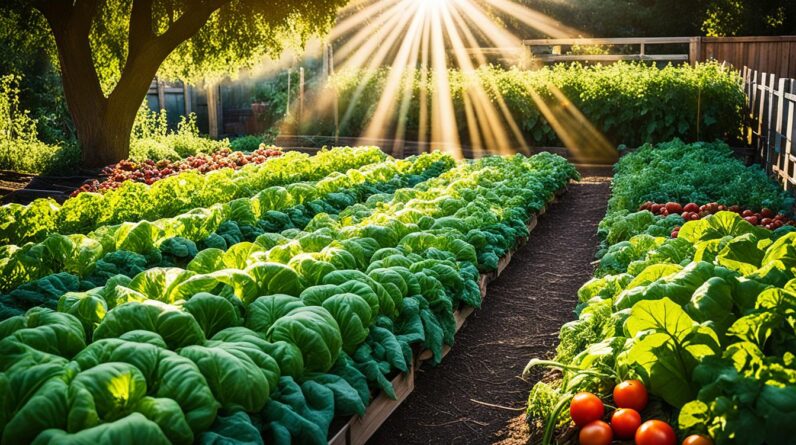
Imagine going out to your backyard and picking fresh tomatoes, crunchy carrots, and savory herbs. All this, thanks to your own garden. Did you know you could save more than $600 a year by growing your vegetables? This guide will show you how to grow and store your own veggies. It’ll help you enjoy the great taste and high nutrition that fresh, organic produce brings.
Key Takeaways
- Discover the significant cost savings and nutritional benefits of growing your own vegetables
- Learn expert tips for timing your harvests for optimal flavor and quality
- Explore versatile storage methods to enjoy your homegrown veggies year-round
- Understand the importance of proper handling and preservation techniques
- Gain insights into creating the ideal growing and storage conditions for a thriving home garden
Importance of Homegrown Vegetables
Growing your own homegrown produce brings many benefits. It’s not just about saving money. You get to eat organic gardening right from your yard. This food is rich in nutrients, making it better for you than store-bought items.
Nutritional Benefits of Fresh Produce
Homegrown veggies are packed with vitamins and minerals. They are much more nutritious than those you find in the store. This is because store veggies lose their goodness on long trips and in storage. Eating your own fresh vegetables helps keep you healthy.
Cost Savings of Growing Your Own
Growing food at home also saves you money. You cut out the cost of shipping and the need for a middleman. So, what you eat is a lot cheaper but still very good for you. This way, you can lower your grocery bills and still eat healthy.
“Cultivating your own fresh vegetables allows you to control the quality and origin of your food, ensuring you and your family enjoy the full nutritional benefits of nutrient-dense food.”
Harvesting Techniques
Getting the timing right is critical when harvesting your veggies. To get the best flavor and quality, pick them just as they reach full maturity. And it’s also vital to be gentle. This ensures your harvest keeps well and doesn’t go to waste.
Timing for Optimal Flavor and Quality
Picking your vegetables at the ideal time enhances their taste greatly. Each type of vegetable has a perfect time to harvest. Look for signs like size, color, and firmness. These help you know when they’re just right to pick.
- Leafy greens like spinach and lettuce are best harvested when they look fresh and feel tender.
- Root veggies like carrots and beets should be picked when they’re a good size, showing their tops a bit.
- For tomatoes, pick them when they are a deep color and soft but not squishy.
Proper Handling to Prevent Damage
How you handle your veggies after picking also matters a lot. Try not to damage them. Breaking or bruising can speed up spoilage and reduce the nutrients. Here are some tips:
- Always use clean, sharp tools. This makes clean cuts without tearing.
- Handle your veggies gently to avoid skin and tissue damage.
- Use clean and airy containers for your harvest. This avoids moisture which can spoil them.
- Get your vegetables into storage as soon as you can to keep them fresh.
Following these harvest and handling rules can really make your veggies shine. You’ll get the best flavor and quality, waste less, and keep them fresh longer.
How To Grow & Store Your Own Vegetables
Starting a vegetable garden is both fulfilling and handy. It doesn’t matter if you’re just beginning or have some experience. Learning how to grow and save your own veggies brings many advantages. You keep your food fresh and full of nutrients. Plus, you cut your grocery costs.
First, pick the best vegetable gardening guide for you. Use smart planting tips and growing methods. After your plants are mature, knowing how to store them is crucial. This step helps keep your harvest fresh for a long time.
Selecting the Right Vegetables
Think about your area’s climate and growing conditions when choosing what to plant. Look at how much sunlight and what type of soil you have. Also, consider how long your growing season is. This ensures your plants will do well. Tomatoes, zucchini, leafy greens, and root veggies like carrots and potatoes are good choices.
Effective Planting Techniques
- Start by improving your soil with compost or manure for better drainage and nutrients.
- Plant your seeds or seedlings at the right depth and space them well. This helps their roots grow properly and lets air circulate.
- Try planting certain veggies together to keep pests away and help each other grow strong.
- Always keep your garden watered, making sure the soil is moist but not flooded.
Harvesting and Storage Strategies
Pick your vegetables at the best time to get the best taste and quality. Be gentle handling them to avoid damage. Discover the best storage solutions for each kind of veggie. This could be cool, dry storage or another method. Good storage choices make your harvest last longer, so you can enjoy your veggies for a while.
“The greatest gift of the garden is the restoration of the five senses.” – Hanna Rion
With these vegetable gardening guide steps, you’ll be on your way to a successful garden. You’ll have fresh, healthy food for your family many months of the year. Enjoy the freedom and wonderful tastes of your homegrown veggies.
Storage Conditions
It’s vital to know how to store homegrown veggies well. This keeps them fresh longer. Each type of vegetable needs its own ideal temperature and humidity level. Keep them in your fridge, basement, or a special spot.
Cool and Dry Storage
Some veggies love a cool, dry place like a basement or pantry. They stay best at 50-70°F with 60-70% humidity. This is perfect for onions, potatoes, garlic, and winter squash. Dry storage cuts down on spoilage.
Cold and Dry Storage
Other veggies need even colder, dryer conditions. Store them in a fridge or dedicated spot between 32-40°F. This is great for leafy greens, carrots, broccoli, and cauliflower. It helps them keep their crunch and taste fresh.
Cold and Moist Storage
Certain veggies, like beets and turnips, like it cool and damp. A root cellar or a fridge with 90-95% humidity at 32-40°F is ideal. The extra moisture stops these veggies from drying out. This keeps their texture just right.
Knowing the right storage for each vegetable keeps them tasting good longer. The trick is to control the temperature and humidity well. It’s all about keeping your veggies at their best.

Basement and Cellar Storage
Basements and cellars are great for storing homegrown veggies. They keep a steady temperature and keep bugs away. But, you need good ventilation and insulation to keep your veggies fresh and safe.
Ventilation and Rodent Protection
It’s key to let the air flow to keep your veggies in good condition. A proper system keeps the air dry and stops mold. You also want to keep out pests to protect your root cellar storage and basement storage.
- Install reliable ventilation fans or windows to promote air circulation.
- Seal any cracks, crevices, or entry points to deny access to rodents and other unwanted guests.
- Consider using wire mesh or hardware cloth to create barriers and protect your stored produce.
Temperature Stabilization with Insulation
Keeping a steady temperature is crucial for temperature regulation in your storage space. Good insulation stops temperatures from changing too fast. This keeps your veggies in top shape.
- Install high-quality insulation in the walls, ceiling, and floor of your storage area.
- Use a thermostat to check the temperature for temperature regulation.
- Think about adding ventilation systems for better airflow.
Handling ventilation, pest control, and temperature regulation makes a perfect spot for your veggies. These tips ensure your veggies stay fresh and healthy.
Outdoor Storage Methods
For those with limited indoor storage, keeping vegetables outside can work well. You can try a barrel pit for root crops or mound storage for other produce. These are both easy and not costly ways to store food.
Barrel Pit Construction
To store potatoes, carrots, and more, you just need a barrel pit. First, dig a hole in a spot that’s not wet. Then, put a barrel in it. Line the inside with straw.
After, fill the barrel with vegetables. Put more straw on top. Finally, cover everything with soil or mulch. This keeps your crops in good shape. Check the barrel often to get rid of anything bad.
Mound Storage for Short-Term Needs
If you only need to store food for a little while, mound storage is perfect. Just place your fresh produce in a pile. Then, cover it well with straw or leaves. This keeps things from getting too cold but lets some air in.
This method is great when you don’t want to spend much. You can keep your harvest fresh for several weeks. Always watch the mound and make changes to keep your food safe.
“Outdoor storage methods like barrel pits and mound storage provide a simple, cost-effective way to extend the life of your homegrown vegetables.”
Specific Vegetable Storage Guidelines
Storing vegetables right is vital to keep them fresh. Every vegetable has its own needs. Know these to enjoy your harvest longer.
Root Vegetables
Root veggies like carrots and potatoes do best in cool, damp places. This can be a root cellar or basement. Keep them between 35°F and 40°F. Use containers with 90-95% humidity. Adding damp sand or sawdust helps keep the right moisture.
Leafy Greens
Lettuce, spinach, and kale need the fridge with a bit of moisture. Put them in a bag or container with holes and seal it. Keep these greens away from fruits that give off ethylene gas. This gas can make them wilt too fast.
Tomatoes and Peppers
Tomatoes and peppers like it warm, around 55°F to 70°F. A cool, dark spot is good for some extra days of storage. But, not the fridge. The chill can harm them.
| Vegetable | Ideal Storage Conditions | Shelf Life |
|---|---|---|
| Carrots | 35°F to 40°F, 90-95% humidity | 4-6 months |
| Potatoes | 40°F to 50°F, 90-95% humidity | 3-6 months |
| Spinach | 32°F to 40°F, high humidity | 3-5 days |
| Tomatoes | 55°F to 70°F, out of direct sunlight | 1-2 weeks |
Stick to these storage tips to keep your veggies in top shape. Your produce will stay fresh and nutritious past when it’s picked.
Freezing and Preserving Techniques
There are many ways to keep your homegrown vegetables fresh. Freezing, dehydrating, and pickling are key methods. They let you enjoy your garden’s produce for a long time.
Blanching for Freezing
Blanching means boiling your veggies for a short time before freezing. This step is essential. It stops enzymes from causing your veggies to change color or lose their texture and taste. Your veggies will stay colorful, crisp, and fresh for months in the freezer. Proper blanching keeps their qualities intact.
Dehydrating and Pickling Methods
Dehydrating your veggies makes tasty snacks and ingredients that last. It takes out the moisture, concentrating their natural sugars and flavors. These dried veggies are great in soups and stews, and they last longer than fresh veggies.
Pickling is a fun way to keep your produce for longer. The pickling process uses an acidic brine that not only makes the veggies tastier but also preserves them naturally. The pickles stay fresh and delicious for a long time.
“Preserving the harvest is a time-honored tradition that allows us to savor the flavors of summer all year round.”
Using freezing, dehydrating, and pickling, you can keep enjoying your homegrown veggies for a long time. This way, you make the most of the delicious fruits of your labor in the garden.

Conclusion
Growing your own vegetables at home is both fun and beneficial. It helps you eat healthier and saves money. You also get a great feeling of being able to take care of yourself and ensure you always have food.
By following the advice in this guide, you’ll have plenty of tasty vegetables to eat all year. It doesn’t matter if you’re already skilled in gardening or just starting. The tips here will help you succeed. You’ll learn why fresh food is so good for you and how growing it saves you money. Plus, you’ll feel more in charge of your food and enjoy the independence that comes with it.
While you keep learning and trying new ways to store your veggies, don’t forget the most important part. The real joy is in what you achieve and how it makes you feel. You’ll feel proud of what you do, and you’ll be more connected to the Earth and its natural way of growing things. So, enjoy this journey and pick the fruits of your work every season.
FAQ
What are the key benefits of growing and storing your own vegetables?
Growing your own veggies has big perks. You get to eat fresh and healthy. It saves a lot of money. Plus, you know where your food comes from and what went into it.
What are the crucial techniques for properly harvesting homegrown vegetables?
It’s important to pick your vegetables when they’re just right. Being gentle when you do this keeps the flavor and quality high. This also helps them last longer.
What are the primary storage environments for preserving homegrown vegetables?
For storing, you need the right conditions. Some veggies like cool, dry spots. Others need to be cold and dry. A few thrive in cold, moist environments. Each type has its own ideal setting.
How can basements and cellars be utilized for storing homegrown vegetables?
Basements and cellars can be perfect for keeping your veggies. But, they need good air and the right temp. Thinking about how to keep the area well-ventilated and at a stable temperature is key.
What are some practical outdoor storage methods for homegrown vegetables?
If you’re short on indoor space, outdoor methods can work. Things like barrel pits and burying veggies in mounds help keep them fresh. These methods work well for root crops.
How can homegrown vegetables be preserved through freezing, dehydrating, and pickling?
To keep the taste of your harvest for months to come, try freezing, drying, or pickling. Blanch your veggies before freezing, dehydrate them, or pickle them to enjoy later. This way, you can savor your hard work all year round.
Source Links
- Harvesting and storing home garden vegetables – https://extension.umn.edu/planting-and-growing-guides/harvesting-and-storing-home-garden-vegetables
- Storing and Preserving Your Garden Harvest – https://www.growveg.com/guides/storing-and-preserving-your-garden-harvest/
- Storage of Home-Grown Vegetables – 7.601 – Extension – https://extension.colostate.edu/topic-areas/yard-garden/storage-of-home-grown-vegetables-7-601/


