


👕 From Trash to Tactical: 10 DIY Survival Clothing Hacks That Actually Work
Turning Scarcity into Strength
When the grid goes down, clothing stops being fashion — it becomes survival.
Every ripped pair of jeans, every old sweatshirt, every sock stuffed in the back of a drawer carries hidden value when supplies vanish. The people who thrive in chaos aren’t the ones with the most gear; they’re the ones who know how to turn what they have into what they need.
That’s where DIY survival clothing hacks come in — small, clever tweaks that turn ordinary clothes into waterproof, insulated, or tactical tools. This isn’t theory pulled from prepper forums; these are field-tested hacks designed to work when nothing else does.
The Hidden Potential in Everyday Clothing
We’ve been trained to toss and replace. A tear? Trash it. A stain? Donate it.
But survival flips that logic upside down. When the stores are closed and supply chains stop, the worn-out clothes in your closet might become your greatest asset.
Why Ordinary Fabrics Outperform Expectations
Each material tells a story of strength:
- Cotton burns evenly, filters water, and doubles as medical gauze.
- Wool keeps warmth even when soaked — a built-in life insurance policy.
- Nylon shrugs off water and wind like a silent armor.
Understanding how these fabrics behave is step one in building a wardrobe that can outlast modern convenience.
Items in Your Home That Double as Survival Gear
You don’t need high-end tactical gear when your own home is already full of it:
- Old jeans can become fireproof mitts or patched tarps.
- Flannel shirts work as bug wraps or crude filters.
- Worn-out socks serve as gloves, foot wraps, or makeshift strainers.
Survival, at its core, is creativity under pressure.
10 DIY Survival Clothing Hacks That Actually Work
These hacks are simple, fast, and proven — the kind of tricks that move you from “prepared” to unstoppable.
1. Reinforce Fabric Strength with Fishing Line
Use fishing line or dental floss for stitching — it’s nearly unbreakable. Double-stitch seams, especially in stress zones like knees and elbows, and you’ve instantly extended your clothing’s lifespan.
2. Turn a Sleeve into a Water Pouch
Cut off a sweatshirt sleeve, seal one end with melted wax or duct tape, and tie the other. You now have a flexible, water-tight canteen made from the shirt on your back.
3. Build Bug-Repelling Wraps from Old Shirts
Mix beeswax with a few drops of mint or eucalyptus oil, brush it onto fabric, and let it harden. The scent deters mosquitoes naturally, without sprays or chemicals.
4. Make Gaiters from Torn Pants
Slice the legs off old pants, tie them around your shins, and you’ve got instant leg protection from thorns, ticks, and snakes — no fancy gear required.
5. Convert Socks into Portable Hand Warmers
Fill them with rice or beans, knot the ends, and heat near a fire-safe stone. They hold warmth for hours and double as a reusable compress for sore muscles.
6. Waterproof Fabric with Candle Wax
Rub a candle or beeswax block into fabric, then warm it with a hair dryer or firelight until it melts in. You’ve created a weatherproof layer that sheds rain like nylon.
7. Twist Cotton Threads into Cordage
Rip a shirt into strips, twist the fibers, and braid them into rope. A few minutes of work gives you a sturdy, multi-use cord strong enough to tie gear or set snares.
8. Turn Belts into Utility Straps
Old leather belts are underrated survival tools. Cut and shape them into knife sheaths, sling straps, or tool loops. Wax the leather to prevent cracking over time.
9. Camouflage with Mud and Ash
If you need to disappear, ditch bright fabrics. Rub mud or ash into your clothes to mute the color and blend into your surroundings. It’s primitive, but it works.
10. Trap Heat with a Plastic-Layer Sandwich
Slide grocery bags between fabric layers to trap body heat. It’s not glamorous, but it can mean the difference between shivering and surviving a cold night outdoors.
The Art of Improvised Adaptation
In survival, improvisation is intelligence. Anyone can buy gear; few can create it from scraps.
How Survivalists Think Under Pressure
When panic hits, creativity becomes your greatest weapon. Survival psychology shows that focusing on action — sewing, patching, building — calms the mind and slows the fear response.
Finding Calm Through Creation
Every time you fix or modify your clothing, you’re not just patching fabric — you’re restoring control. That’s the invisible advantage of these hacks: they keep your hands busy and your brain confident.
Keeping Your Gear Alive in Harsh Conditions
Even DIY gear needs upkeep. Neglect it, and the environment will win.
Cleaning and Restoring in the Field
Use sand as an abrasive cleaner and rinse with stream water. Dry clothes in shade to protect fibers, and reapply wax coatings every few weeks to keep them waterproof.
When to Repair and When to Let Go
Patch anything that’s ripped under three inches or torn in low-stress zones. But if the fabric’s losing structure around key joints or seams, retire it. Gear loyalty is dangerous when survival’s on the line.
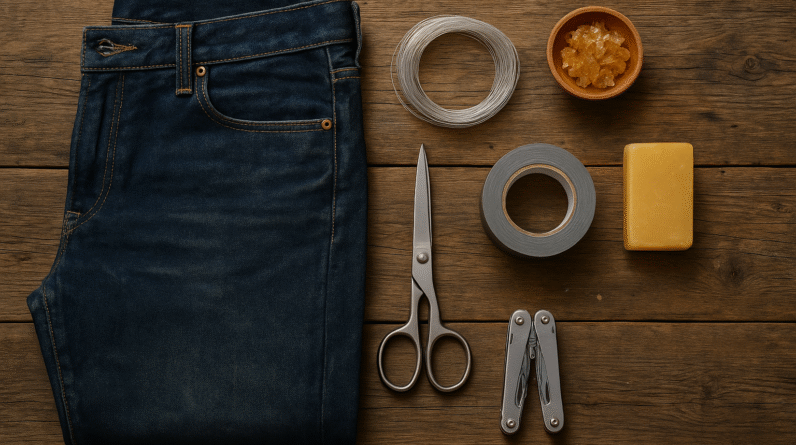
The Minimalist Survival Sewing Kit
You don’t need a sewing room — just a handful of reliable tools:
- Heavy-duty needle or fish hook
- Waxed thread or fishing line
- Scissors or multitool
- Beeswax or resin
- A few safety pins and duct tape
With these in your pocket, you can repair almost anything on the move.
Natural Adhesives & Waterproofing Agents
Mother Nature is a gear shop in disguise. Pine resin, sap, and melted beeswax can all act as glues, sealants, or weatherproof coatings. A simple resin patch can keep your only pair of boots dry through an entire storm.
FAQs
Q: Can DIY survival clothing replace professional gear?
In many cases, yes. It’s not about the fabric — it’s about the skill. Store-bought gear breaks. Knowledge doesn’t.
Q: What’s the easiest hack for beginners?
Waxing fabric. It takes minutes, adds durability, and feels almost magical the first time you see rain roll right off your homemade jacket.
Q: Are natural or synthetic materials better for survival?
Each has its place. Cotton for burning and filtering, wool for warmth, nylon for protection. The smartest preppers mix them for versatility.
🧰 Products / Tools / Resources
If you’re serious about building your own survival wardrobe, here’s what’s worth keeping close:
- Beeswax or candle wax – for waterproofing.
- Fishing line or waxed thread – high-tensile stitching for field repairs.
- Old denim, flannel, nylon scraps – raw material for DIY builds.
- Small sewing kit or multitool – compact enough for every bug-out bag.
- Natural oils or wax-based repellents – long-term protection against bugs and moisture.


