


5 Essential Survival Skills You’ll Want Dialed In Before the Next Crisis
The Camping Trip That Changed How I Think About Preparation
I still catch myself replaying that weekend sometimes. It was supposed to be an easy getaway — nothing more than a couple of friends, fresh air, and a break from routine. I packed like I always do: too many snacks, a pile of gadgets, and the kind of gear that made me feel prepared.
But when the storm rolled in on the second night, all of that confidence evaporated. The wind ripped my tent apart, the fire died in seconds, and the gear I’d spent all that money on didn’t make any real difference.
Somewhere in the noise and chaos, a simple truth clicked: survival isn’t about how much equipment you own — it’s about having a few dependable skills you can fall back on when everything else stops cooperating. You don’t need to be an expert, but knowing the basics ahead of time makes unpredictable moments a lot less overwhelming.
Here are the five skills I wish I had taken more seriously before that night.
1. Fire Starting: A Small Skill With a Big Impact
That cold hit fast. The kind that crawls up your spine and makes every minute feel longer. Without a fire, we had no warmth, no way to heat food, and no real comfort.
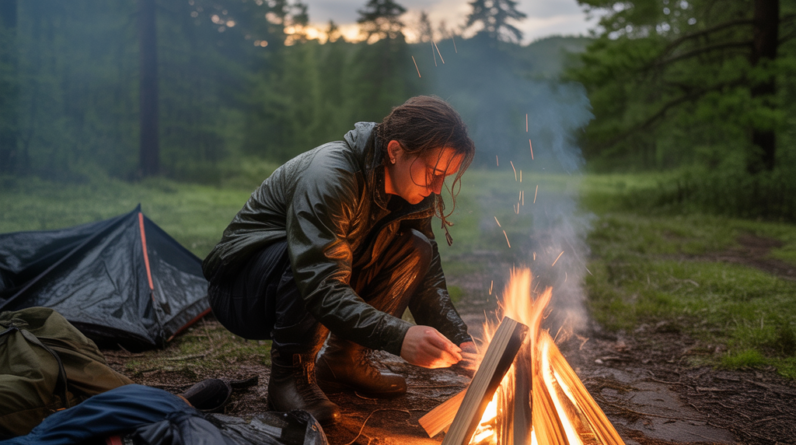
Being able to start a fire — even when the weather is working against you — is one of those practical skills that supports everything else. Warmth, cooking, visibility, even signaling for help. It’s the type of thing you want dialed in before you need it.
🔥 Survival Tip: Keep a simple fire-starter kit in your bag. Flint and steel, a magnesium striker — anything that works consistently. A little practice now goes a long way later.
2. Water Purification: When “Looks Fine” Isn’t Enough
After the storm, water pooled everywhere, but none of it looked trustworthy. The streams were cloudy from runoff, and drinking any of it without treating it first wasn’t a risk worth taking.
Knowing how to make water safer is one of those skills that pays off in outdoor situations and unexpected urban emergencies alike. Even clear water can carry things you don’t want to deal with.
💧 Survival Tip: Carry a portable filter or purification tablets. Boiling water works too if you have the means. When you’re unsure, treat the water — it’s a simple step that adds a layer of protection.
3. First Aid: Keeping Small Problems Small
Being so far from help made every minor injury feel bigger. A slip on wet rock, a cut that wouldn’t stop bleeding, a twisted ankle — none of them were dramatic, but they all mattered when we realized help wasn’t coming anytime soon.
Knowing basic first aid gives you something to work with until you can reach proper care. It doesn’t require medical training, just a little preparation.
🏥 Survival Tip: Pack a basic first aid kit and learn essential techniques like cleaning and bandaging wounds, handling sprains, and understanding CPR or the Heimlich. These fundamentals are widely recommended for general preparedness.
4. Shelter Building: Your First Line of Defense Against the Weather
When my tent gave out, it didn’t take long to understand how quickly the elements become a challenge. Without shelter, every type of weather feels more intense — heat, cold, wind, rain, all of it.
Being able to put together a simple, temporary shelter is useful almost anywhere, not just in the woods.
🏕️ Survival Tip: Practice building a basic lean-to or A-frame with whatever’s around you. Adding an emergency bivvy or thermal blanket to your pack is an easy way to stay more prepared.
5. Navigation: A Backup When Technology Taps Out
The moment my GPS died and my phone dropped to “No Signal,” I felt the floor fall out from under me a little. Without a map or compass, the trees all looked the same.
Navigation skills offer a reliable backup when tech isn’t an option. Even a basic understanding of maps, compasses, or natural cues can help you feel more oriented.
🧭 Survival Tip: Bring a physical map and compass and learn how to use them. Familiarizing yourself with simple natural markers — the sun, stars, or major landmarks — gives you another toolset to rely on.
Why These Skills Matter
That night in the storm reminded me that gear can fail, batteries die, and plans get messy — but skills stay with you. You don’t have to learn everything at once. Just starting now makes unpredictable moments much easier to handle later.
Take Action
Preparedness often starts with simple knowledge.
If you want a deeper walkthrough of these skills, you can download the free guide here:
A few hours of practice now can make challenging moments feel a lot less overwhelming.
What are the most essential survival skills?
The most essential survival skills include fire starting, water purification, basic first aid, shelter building, and navigation. These skills help you stay warm, hydrated, safe, and oriented when conditions change unexpectedly.
Why are essential survival skills important?
Essential survival skills give you reliable options when gear fails, technology stops working, or help isn’t immediately available. They make unexpected situations easier to manage.
How can beginners learn survival skills?
Beginners can start by practicing simple skills at home: building a small fire, purifying water, reviewing basic first aid, setting up a shelter, and learning to read a map and compass.
What’s the easiest survival skill to learn first?
Fire starting or water purification are often the easiest skills to begin with because the techniques are simple and require minimal equipment.
Do you need survival gear to learn these skills?
You can learn most essential survival skills with basic tools or everyday items. Gear helps, but the real value comes from knowing how to apply the skills in different situations.


